
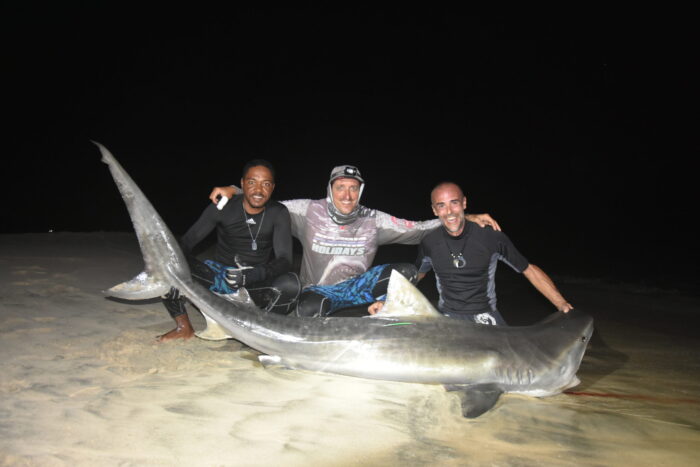
No boat and no fighting out at sea. On the island of Sal, lemon, blacktip, nurse and dusky sharks can be targeted directly from the coast, between volcanic cliffs and Atlantic beaches. A demanding adventure that can be organised throughout the year, relying on local expertise, suitable equipment and detailed knowledge of the fishing spots.
The balloon moves away from the cliff, carried by the Atlantic wind and taking the bait offshore. Below the fishing position, the seabed drops to a depth of more than forty metres. The rod is almost four metres long, the reel is rated for 50 pounds, and the steel leader immediately makes the objective clear: hooking a shark without ever leaving dry land.
We are on the island of Sal, in the Cape Verde archipelago, where volcanic cliffs and long ocean beaches create extraordinary conditions for fishing for large predators. Every stretch of coastline has its own character and every fishing spot requires a specific approach, chosen according to the wind, waves, currents and tides.
Fishing for sharks from shore is not simply a coastal version of big-game fishing. It is a different discipline, governed by the limitations and opportunities of fishing from dry land. The angler cannot follow the fish with a boat or change position freely once the fight has begun. Every decision must therefore be anticipated: the choice of spot, the direction in which the bait is released, the strength of the tackle and the route through which the shark may eventually be brought close to shore.
The sharks that come close to the coast
Several shark species can be encountered in the waters around Sal. The most frequent targets include lemon, blacktip, nurse, dusky and bull sharks. Sandbar and Galapagos sharks are also present, while encounters with hammerheads are considerably rarer.
The distinctive feature lies not only in the variety of species, but also in the possibility of targeting them directly from cliffs and beaches. When the predator takes the bait, the angler must contain its runs, work carefully with the drag and take advantage of every moment when the shark slows down.
Physical strength matters, but it is not enough. Patience, suitable equipment and experience are essential. Above all, the safety of the fishing position must be assessed before casting: a spectacular spot is useless if it does not allow the angler to fight the fish or manage the final stages without unnecessary risks.
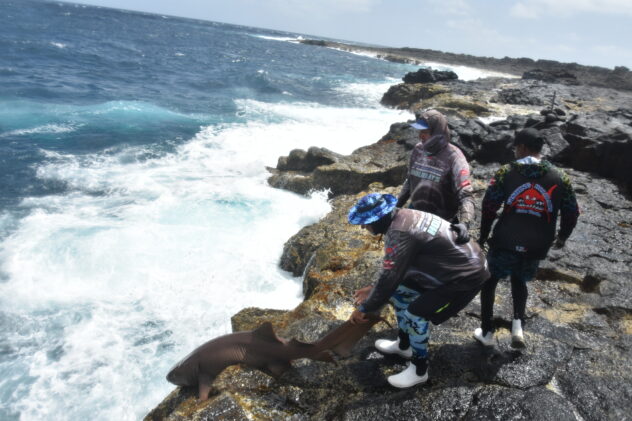
From the cliffs with a balloon
Rock fishing is the most spectacular technique. It is generally practised during the day because remaining on volcanic cliffs after sunset would considerably increase the danger. The fishing positions overlook rocky seabeds that can exceed forty metres in depth and allow the bait to be presented well away from the cliff face.
One of the most effective systems is the balloon rig. Wind and current carry the bait out towards the open sea until it reaches the chosen area. When the shark attacks, the balloon breaks free and the angler enters into direct contact with the fish.
The alternative is the cableway rig. The sinker is cast or positioned on the seabed, while the bait slides along the main line until it reaches the fishing area. This method is used to target sharks moving in deep water close to the cliffs.
Fights can last a long time, especially with large specimens. Some sharks can be brought directly below the fishing position but cannot be safely lifted onto the rocks. In such cases, it is necessary to give up the photograph and cut the line rather than attempt dangerous recovery manoeuvres. The priority must remain the safety of both the angler and the animal.
When the shark comes onto the beach
The other major opportunity is heavy surf casting. On the beaches of Sal, sharks can move close to the shore, particularly around sunset, when conditions change and predator activity increases.
Rods, reels and leaders must be capable of withstanding powerful and sudden runs. The beach offers greater freedom of movement than the cliffs, but bringing a shark into the shallows still requires coordination. The angler maintains contact with the fish while the people assisting prepare to manage the final phase.
Once on the shoreline, the shark can be quickly measured and photographed before being released. The speed of these operations is crucial. Experience in handling the animal, proper preparation and respect for the shark make the difference between a memorable catch and an unnecessarily invasive action.
The most exciting possibility is sight fishing: locating the shark close to the coast, presenting the bait in its path and watching the attack. The encounter with the predator leaves the traditional setting of big-game fishing and takes place only a few metres from the beach.
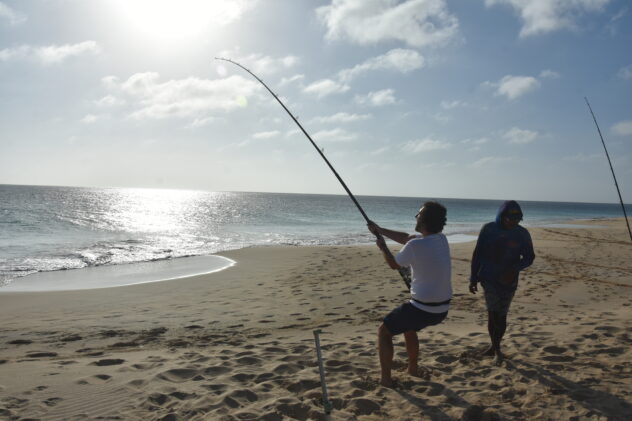
No guaranteed catches
Going shark fishing from shore does not mean being guaranteed a catch. Wind, tides, currents, sea conditions, the movement of prey and luck all remain decisive. A blank session must always be taken into account.
It is precisely this uncertainty that makes the experience authentic. Hours may be spent watching the balloon move farther away or the rods remain motionless on the beach. Then, suddenly, the reel’s drag begins to release line and what appeared to be still turns into a fight in which every decision matters.
A properly organised trip requires heavy-duty equipment, suitable bait, transport to the fishing spots and experienced local assistance. The programme must remain flexible because the best side of the island can change according to the weather and sea conditions. Knowing when to move — and when not to fish — is just as important as knowing how to cast.
Spinning and other forms of shore fishing can also be practised on Sal, targeting Jack Trevally, Black Jack, bonito, dolphinfish, grouper, moray eels and rays. These possibilities, however, remain complementary: the true protagonists of this adventure are the sharks.
Shark fishing trips throughout the year
Sharks can be targeted from the coast of Sal throughout the year, although conditions, species and the most productive fishing spots may vary from season to season. Every trip must therefore be planned according to the period, the experience of the participants and the type of fishing they wish to attempt.
This is not a holiday for anyone seeking comfort or guaranteed results. It is an adventure for anglers prepared to wait, face wind and rocks, get up before dawn or remain on the beach after sunset. The catch represents the culminating moment, but not the only one: preparation, reading the sea and the emotion of knowing that one of the ocean’s greatest predators could be at the other end of the line are all part of the experience.
Readers interested in organising a shark-fishing trip from shore on the island of Sal can contact me directly. I know whom to approach locally and can act as the point of contact for arranging personalised fishing sessions throughout the year, verifying availability, costs, equipment, accommodation and the programme of outings.
The appointment is on a beach or a volcanic cliff overlooking the Atlantic. Ahead, only the ocean. And beneath its surface, the shark we are looking for.