
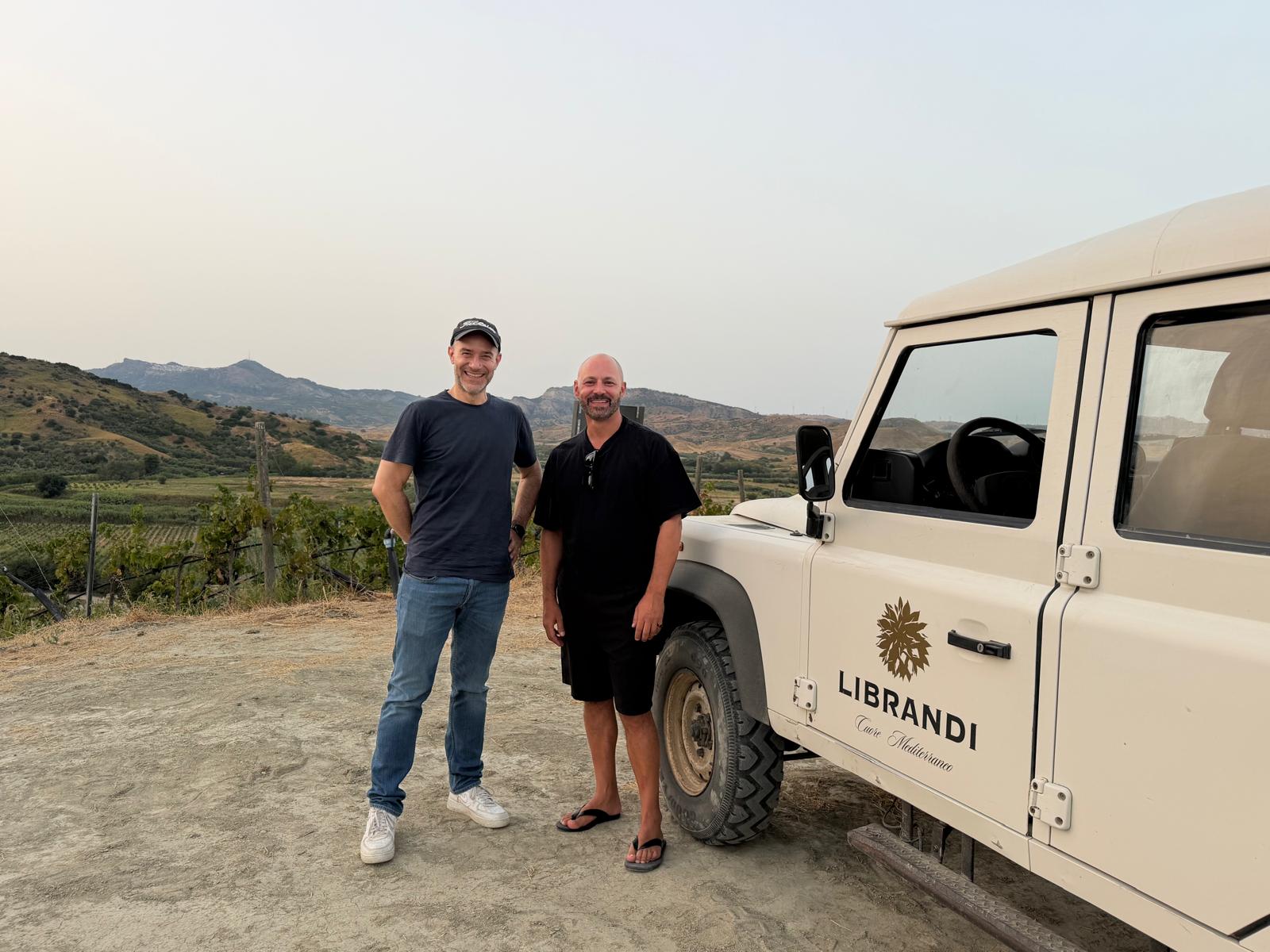
In Cirò Marina, the story of four generations becomes an itinerary through vineyards overlooking the Ionian Sea, ancient bush-trained vines, hills facing the Sila mountains and grape varieties saved from extinction. With the Vine and Wine Museum and the great experimental garden at Rosaneti, Librandi does not merely tell the story of its own winery: it preserves and makes accessible part of Calabria’s agricultural identity.
There are wineries that people visit to taste a wine and others that allow them to understand a land. Librandi belongs to the second category. Because arriving in Cirò Marina and stopping at the tasting would mean observing only the surface of a story that spans four generations, six estates and a large part of Calabria’s winemaking heritage.
Here, the journey begins before the glass. It begins with the landscape, in that stretch of Calabria where the Ionian Sea and the Sila mountains seem to draw so close that they almost touch. In between, plains, hills, Mediterranean scrubland, olive groves and small villages clinging to the high ground alternate with one another. It is a region of geographical contrasts, but also a territory in which the vine has found many different forms of expression over the centuries.
The sophisticated traveller, the one who is not satisfied with collecting labels and photographs, finds something rarer here: the opportunity to read wine as a document of the landscape and its history.
From Enotria to Cirò, the land of wine
The relationship between Ionian Calabria and the vine predates the birth of contemporary denominations by many centuries. Greek colonisation brought populations experienced in vine cultivation to these shores, helping to spread the name Enotria Tellus, the “Land of Wine.”
The ancient wines of Krimisa, the name by which the Cirò area was known, achieved such fame that they came to be associated with victorious Olympic athletes. The choice of Cirò as the symbolic wine of the 1968 Mexico City Olympic Games is also ideally connected to that distant history.
This is not merely a precedent to be cited in order to lend prestige to a bottle. It is a sign of how deeply the vine has entered the identity of this part of Calabria, shaping work, social relationships and even the way in which the territory is understood.
The Librandi family has been cultivating vines in Cirò for four generations. Its transformation into a modern wine business took shape during the 1950s, when Antonio and Nicodemo Librandi expanded the family activity and organised it for the bottling, storage and commercialisation of wine.
In 1953, the bottling of wines made from Gaglioppo and Greco Bianco began in the small cellar in Via Tirone. Two years later, the Ponta Estate was purchased in the historic area of the Cirò DOC. In 1975, the company moved to its new production facility in Contrada San Gennaro, which remains the winery’s headquarters today.
That growth did not break the family continuity. Following Antonio’s death, the company remained in the hands of Nicodemo, Raffaele, Paolo, Francesco and Teresa Librandi, who are directly involved in its different activities, from vineyard management to sales.
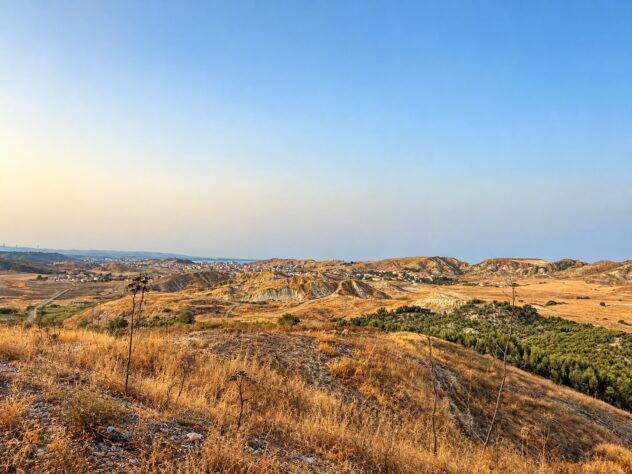
Ponta, where the family’s history still has roots
To understand Librandi, one must begin with Ponta, the estate from which the company’s story began. The vineyards were planted in the 1950s by Raffaele Librandi, father of Antonio and Nicodemo and grandfather of the generation currently working in the company.
At that time, the property could be reached by using the nearby Lipuda riverbed as a landmark. Gaglioppo was bush-trained according to the ancient tradition of the Cirò area. The family’s oldest bush-trained vines are still found here, producing Duca Sanfelice Cirò Rosso Riserva Classico Superiore.
Ponta is not merely a historic vineyard. It is the place where the entrepreneurial story reconnects with the family story. For those visiting a winery in search of something beyond a tasting, it provides the first key to interpretation: Librandi wine was born from an agricultural history before it became a commercial one.
Over time, Ponta was joined by Arcidiaconato, Pittaffo, San Biase, Brisi and, above all, Rosaneti. Six estates that do not simply represent six different properties, but different interpretations of Ionian Calabria: the red clays of the hinterland, vineyards overlooking the sea, historic plots in the centre of Cirò and hills facing both the Ionian Sea and the Sila mountains.
Rosaneti, the landscape that explains Calabria
A visit to the Rosaneti Estate, between the municipalities of Rocca di Neto and Casabona, is probably the moment when the scale of the company and that of the territory become one and the same.
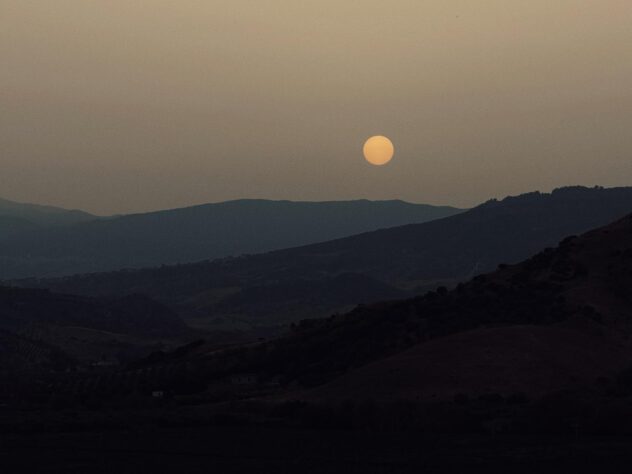
It is the family’s largest estate: around 155 hectares of vineyards, 80 hectares of olive groves and, all around them, Mediterranean scrubland and oak woods. From the highest points of the hills, the view reaches the blue of the Ionian Sea on one side and the Sila mountains, often covered with snow during winter, on the other. In between appear Calabrian villages, cultivated expanses and that succession of landscapes that makes it difficult to reduce the region to a single image.
The tours organised by the company take guests into the heart of the estate aboard pick-up trucks, reaching the vineyards and the hilltops from which the landscape can finally be read in its entirety. It is not simply a transfer between rows of vines: it is a way of understanding the influence of light, the sea, altitude, soils and drought on the varieties grown here.
Rosaneti is also home to some of the vineyards that best represent Librandi’s work. Vigna Efeso, arranged like a natural amphitheatre on land once covered by the sea, is the place chosen for Mantonico Bianco. An ancient, difficult and low-yielding grape variety that the company recovered by studying surviving specimens and identifying the environment best suited to its cultivation.
Higher up lies Vigna Megonio, a hill surrounded by a crown of olive trees. Here grows Magliocco Dolce, a late-ripening variety that Librandi has played a decisive role in bringing back to the attention of both the public and the scientific community.
Efeso and Megonio are not merely two wines. They are the tangible result of research that has transformed almost forgotten grape varieties into instruments through which Calabria can once again tell its story.
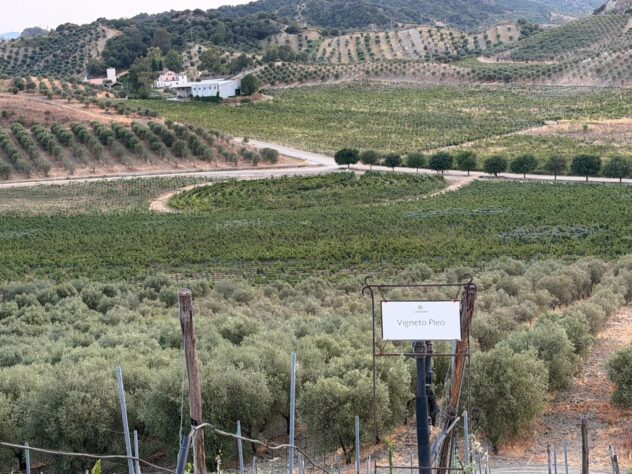
The spiral vineyard preserving 200 varieties
The most surprising place at Rosaneti is probably the varietal garden, a collection of around 200 native varieties recovered throughout the region and planted in a vineyard with a distinctive spiral shape.
It is a kind of living archive of Calabrian biodiversity. Many of those plants were identified in old vineyards close to abandonment, collected and studied through historical, anthropological, agronomic, oenological and genetic research.
The research project took shape in 1993 with the first experimental vineyard, initially dedicated to Magliocco, Mantonico Bianco, Arvino and Pecorello. The purchase of Rosaneti in 1997 made it possible to expand the programme, which was later embodied in the spiral garden created in 2003.
Scholars and technicians including Attilio Scienza, Donato Lanati, Franco Mannini, Anna Schneider, Mario Fregoni, Stella Grando and anthropologist Vito Teti worked alongside the family. The aim was not to invent new varieties, but to understand, preserve and enhance what Calabria already possessed and was in danger of losing.
The research did not remain confined within the company. Clone selection and rootstock studies were also designed to provide improved material to Calabrian winegrowers. The work on Magliocco Dolce, for example, led in 2019 to the registration of the clonal source in Italy’s National Register of Vine Varieties.
This is perhaps Librandi’s most profound contribution to the territory: treating biodiversity not as a promotional subject, but as a heritage to be sought out in the fields, scientifically catalogued and returned to regional viticulture.
The Vine and Wine Museum: memory becomes part of the journey
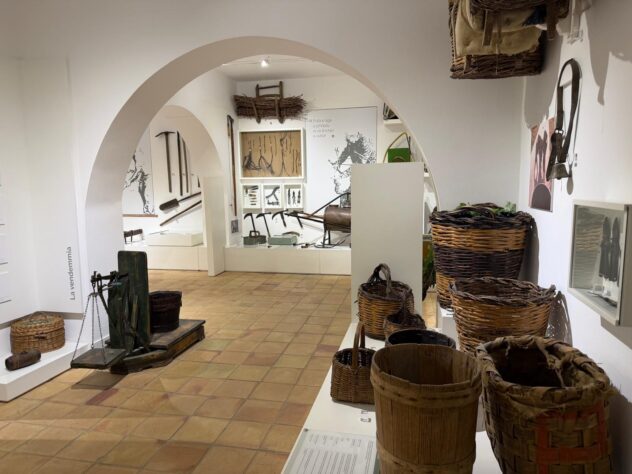
The Vi.Te.S Vine and Wine Museum, whose name stands for Viticulture, Territory and History, is also located within Rosaneti. It is the stage that ideally completes the visit, because it connects what grows in the vineyards today with the work of those who inhabited and cultivated these lands before mechanisation.
The museum extends through eight rooms and houses tools, objects and artefacts connected with viticulture and rural civilisation. Some come from the Librandi family’s storerooms; other objects belonged to local families who, by entrusting them to the collection, allowed them to continue telling their story.
For those who come from a farming family, the visit may take on the meaning of recognition: tools, gestures and forms of work re-emerging from memory. For those encountering this world for the first time, it is instead the discovery of a civilisation that is archaic only in appearance, founded on practical knowledge, adaptability and great ingenuity.
The museum’s merit lies in not indulging in nostalgia. The tools of the past are not displayed as relics of an age that has definitively ended, but as the beginning of a journey leading to contemporary research. From manual pruning to clonal selection, from the traditional bush-trained vine to the experimental plots, knowledge of the vine remains the common thread.
At that point, the tasting is no longer a separate appointment. It becomes the natural conclusion of a day spent among landscape, biodiversity and memory.
Not merely a company, but a winegrowing community
Librandi’s work within the territory does not end at the boundaries of the family’s properties. The company also uses quality grapes sourced exclusively from the Cirò DOC area and works with a network of local growers.
In 2008, the I Vignaioli del Cirò association was established and now brings together 42 members. The vineyard becomes the place in which knowledge, problems and strategies are shared. Growers are offered consultancy, free training, meetings with experts and study trips to leading wine regions in Italy and abroad.
Librandi also takes part in the activities of the Consortium for the Protection of Cirò and Melissa Wines and contributed to the creation of Eu Vite, an association bringing together five companies from different Calabrian provinces to organise tastings, events and promotional initiatives.
It is a choice that reveals a precise concept of growth: a company can establish itself individually, but a wine-producing territory becomes recognisable only if its overall quality improves, it builds shared expertise and learns to present itself to the world as a community.
The change from the previous Val di Neto IGT designation to Calabria IGT reflects the same vision. Placing the region’s name on the label means using the success of individual wines to make the whole of Calabria more recognisable.
The wines as a map of the territory
A Librandi tasting can be read as a geographical itinerary. Duca Sanfelice, made from old Gaglioppo vines bush-trained at the Ponta Estate, tells the story of Cirò’s historic heart. Efeso, produced from Mantonico Bianco, leads to the natural amphitheatre at Rosaneti, among sandstone soils that emerged from an ancient seabed.
Megonio leads to the hill surrounded by olive trees where Magliocco Dolce found its ideal home. Gravello, created in 1988 from the union of Gaglioppo and Cabernet Sauvignon, instead tells the story of the moment when the company opened Calabrian wine to international comparison. It was the first wine from the region to receive Gambero Rosso’s Tre Bicchieri award, becoming a trailblazer for other Calabrian labels.
Then there are Greco Bianco, Rosaneti traditional-method rosé sparkling wine made from Gaglioppo, Critone from Chardonnay and Sauvignon Blanc, and the Le Passule dessert wine. But the most interesting way to approach these wines is not to consider them as a sequence of tastings. It is to look within each one for the vineyard, its exposure, the recovery work and the part of Calabria from which it comes.
The luxury of discovery
For the sophisticated traveller, luxury does not necessarily coincide with a setting designed to impress. It can be the opportunity to climb a hill from which the Ionian Sea and the peaks of the Sila can be seen at the same time. It can mean walking through a spiral of two hundred grape varieties, hearing the story of a variety saved from abandonment or recognising, in an old tool, the intelligence of a rural civilisation.
Visiting Librandi means entering a Calabria that does not reveal itself immediately. You have to cross the vineyards, observe the bush-trained vines, listen to the family’s stories and stop in the museum’s rooms. Only then does the wine arrive.
And it is precisely at that moment that the glass ceases to be the starting point and becomes what it should always be: the liquid synthesis of a territory, its memory and the work carried out to deliver both to the future.


